I’m Tera Sumpter, a speech-language pathologist leading the shift in how we understand child development and learning: start with executive function. I translate brain-based science into practical ways professionals and parents can uncover the root of a child’s executive function challenges and provide support that actually matches what the child needs.

Why EF Matters Across Child Development and Learning
Executive function (EF) is the system underneath learning. It helps students notice what matters, direct and sustain attention, hold information in mind, pause before acting, and decide what to do next.
That means EF affects far more than planning, organization, and time management. It shapes how students access speech and language, literacy, academics, social interaction, regulation, and everyday independence.
A student may understand phonics but struggle to direct their attention long enough to apply it. They may know how to write a paragraph but lose track of the structure while writing. They may understand classroom expectations but have difficulty getting started, shifting when something changes, or stopping an impulse.
When that happens, the visible difficulty may be reading, writing, language, behavior, or task completion. But the barrier may begin with executive function.
EF Starts at the Roots
The foundational executive function skills are:
Perception: noticing and making sense of what is happening
Attention: directing focus to what matters
Working memory: holding and using information
Inhibition: pausing, filtering distractions, and controlling a response
These foundational skills support the development of higher-level abilities such as planning, organization, flexible thinking, time management, emotional regulation, problem-solving, and independence.
Why This Matters for Practice
Schools and intervention settings often begin with the skill that is easiest to see: speech and language, reading, writing, math, behavior, or organization.
But addressing the visible skill does not always address what is making that skill difficult to access.
Looking at EF gives professionals another question to ask: What executive function demands are built into this task, and does the student have the support needed to meet them?
That shift can help professionals more precisely identify where a student is getting stuck, choose supports that match the need, and build greater independence over time.
Executive function is not a diagnosis.
It is part of how students access learning and show what they know.

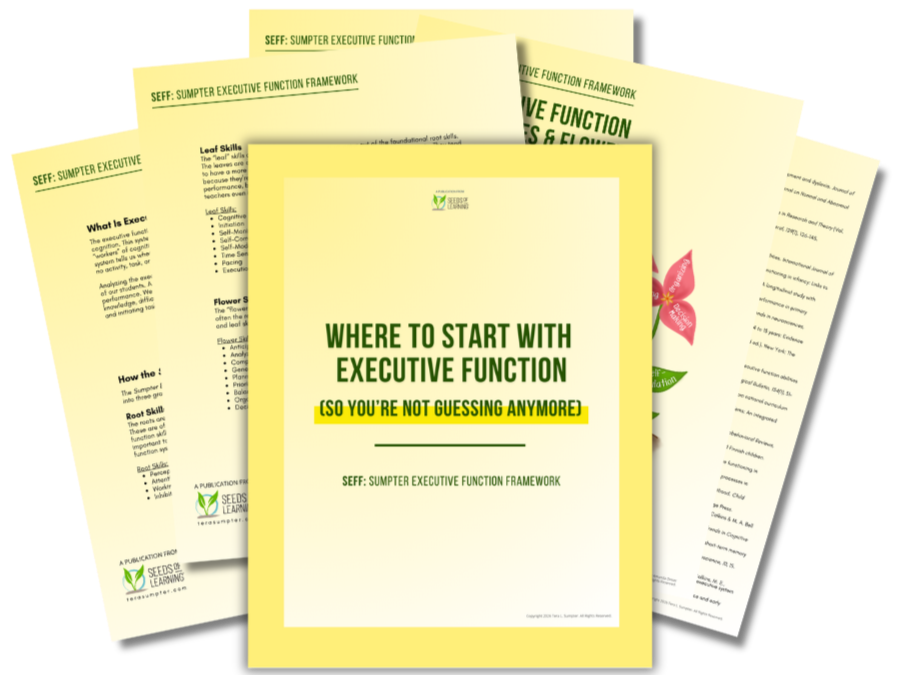
The Sumpter Executive Function Framework (SEFF)
The Sumpter Executive Function Framework, or SEFF, is a developmental model for understanding, assessing, and supporting executive function in children. It is built on one core belief: executive function is the system underneath learning.
Rather than focusing on surface-level strategies, SEFF strengthens the foundational processes that drive development, regulation, and academic performance.

Where Do YOU Fit?


want to go deeper into ef?

Follow me on Instagram!