
THE SUMPTER EXECUTIVE FUNCTION FRAMEWORK (SEFF)
Look underneath learning and behavior.
The Sumpter Executive Function Framework helps parents and professionals understand the skills behind a child's learning, behavior, and development.
When a child struggles to focus, follow directions, get started, or handle change, what we see is only the starting point. SEFF helps us look underneath it.
Winter 2027 Community enrollment opens December 18, 2026.
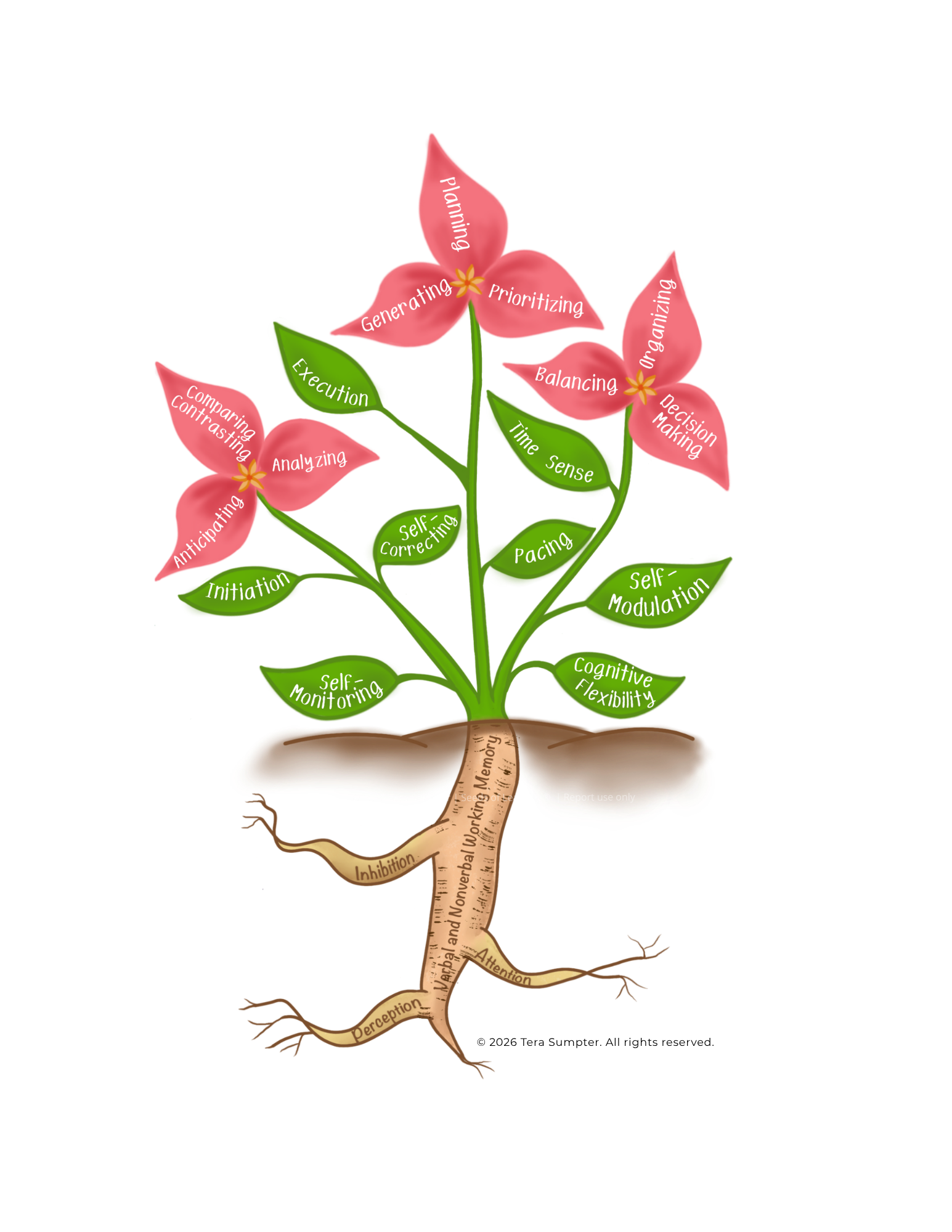
Executive function starts before planning and organization.
Executive function is often associated with organization, time management, and getting things done. But it starts long before that.
A child first has to notice what matters, pay attention to it, hold information in mind, pause before responding, shift when something changes, and monitor what they're doing.
Those skills work together.
They support learning, communication, social interaction, problem-solving, regulation, and independence.
SEFF gives us a way to understand how those skills connect. What happens at the roots affects everything that grows above them.
The difficulty we see may begin further down. SEFF helps us understand where to look.
SEFF Builds From the Roots Up
Just like a plant, executive function develops from a foundation — you can’t strengthen the flowers without understanding the roots.
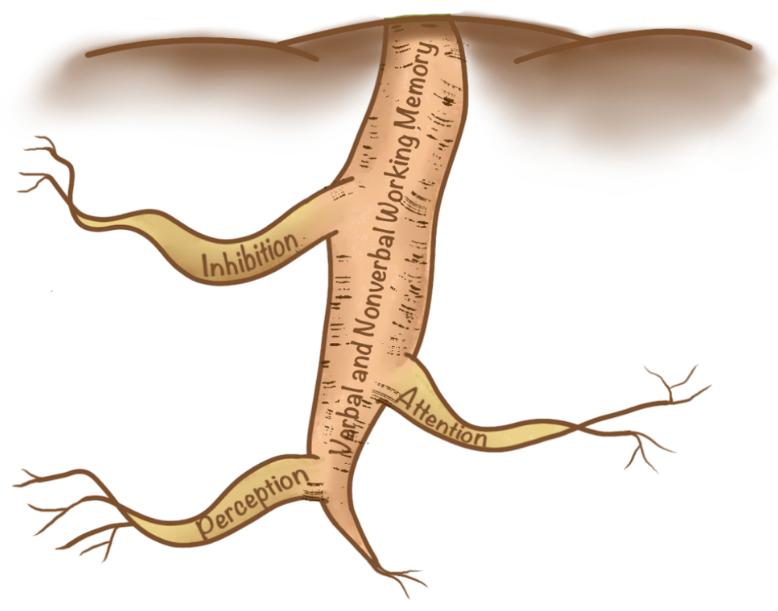
Root Skills
Help a child take in and work with information.
The skills
- Perception
- Attention
- Working memory
- Inhibition
These skills help a child:
- Notice what matters
- Focus attention
- Hold information in mind
- Pause before responding
When these foundational skills are strained, everything built on top of them can become harder.
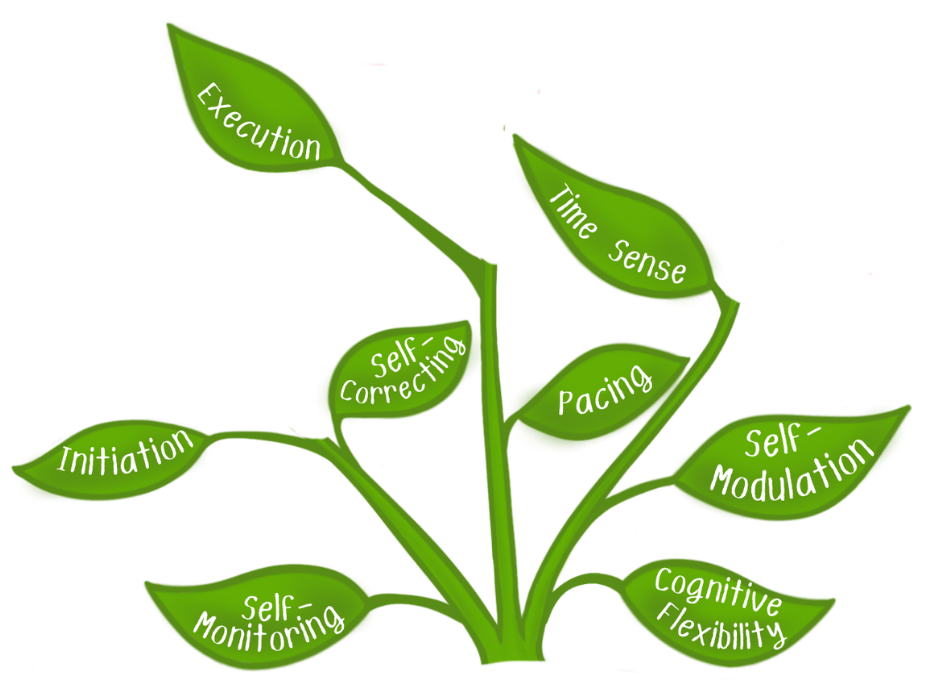
Leaf Skills
Help a child manage themselves as they move through the day.
The skills
- Cognitive flexibility
- Initiation
- Self-monitoring
- Self-correction
- Self-modulation
- Time sense and pacing
These skills help a child:
- Get started
- Shift from one thing to another
- Adjust when something changes
- Notice how they’re doing
- Correct mistakes
- Manage their responses
- Understand and manage time
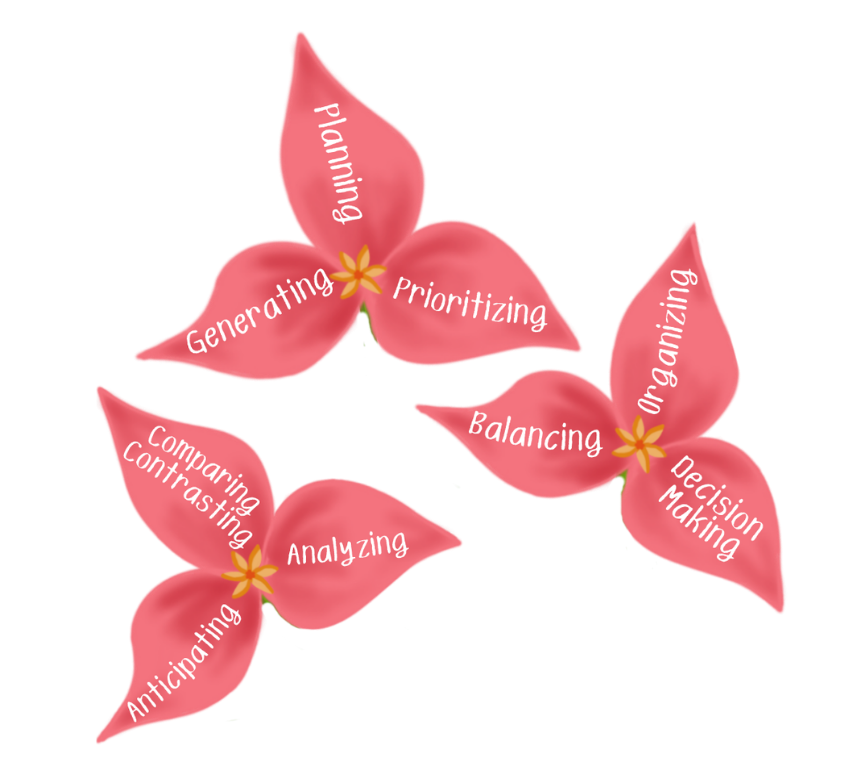
Flower Skills
Help a child plan, solve problems, and work independently.
The skills
- Planning
- Organization
- Anticipating
- Analyzing
- Prioritizing
- Balancing
- Decision-making
These higher-level skills are often the first executive function skills we notice when something isn’t working.
Understanding the Framework Is Just the Beginning.
Ready to put SEFF into practice? Inside the Seeds of Learning® Online Cohort Community, you'll explore Root, Leaf, and Flower Skills through guided lessons, real-world examples, and practical tools to help you better understand and support the children you work with.
Explore the Executive Function CohortFrom what you see to what you ask
What you see
“They won’t start the assignment.”
SEFF helps us look underneath that moment and explore what might be making it difficult.
What SEFF helps you explore
- Noticing Did they notice the direction?
- Remembering Can they hold the steps in their mind?
- Pausing Can they pause and move forward from what they are doing?
- Shifting Is it hard for them to shift to a new task?
- Starting Do they know where to begin?
- Responding Are they feeling overwhelmed or frustrated?
A better question
“What does this child need in order to be successful?”
SEFF helps you find the skill behind the struggle so you can provide support that makes a difference.
Want to Learn How to Apply SEFF in Your Own Practice?
Explore the Seeds of Learning® Online Cohort Community to learn how to identify underlying executive function needs and choose supports that make sense for each child.
Learn SEFF in the Cohort