What the Fibonacci Sequence Can Teach Us About Child Development
Long before I studied speech-language pathology, child development, or executive function, I studied math.
And I mean a lot of math.
Differential equations. Non-Euclidean geometry (yes, the whole Euclid's fifth postulate thing. I seriously can't believe I still remember that!). Chaos theory. Every calculus course offered. Entire classes devoted to mathematical proofs.
I loved it.
I do not spend much time solving differential equations these days (thank goodness!), but I think that background shaped the way I look at children and learning more than I realized at the time.
Math taught me to look for relationships.
It taught me to ask what something depends on.
It taught me to work backward when the outcome did not make sense.
And it taught me that getting the answer was not always enough. You had to understand how you got there.
That is probably why I keep coming back to the Fibonacci sequence.
You may remember it:
0, 1, 1, 2, 3, 5, 8, 13, 21...
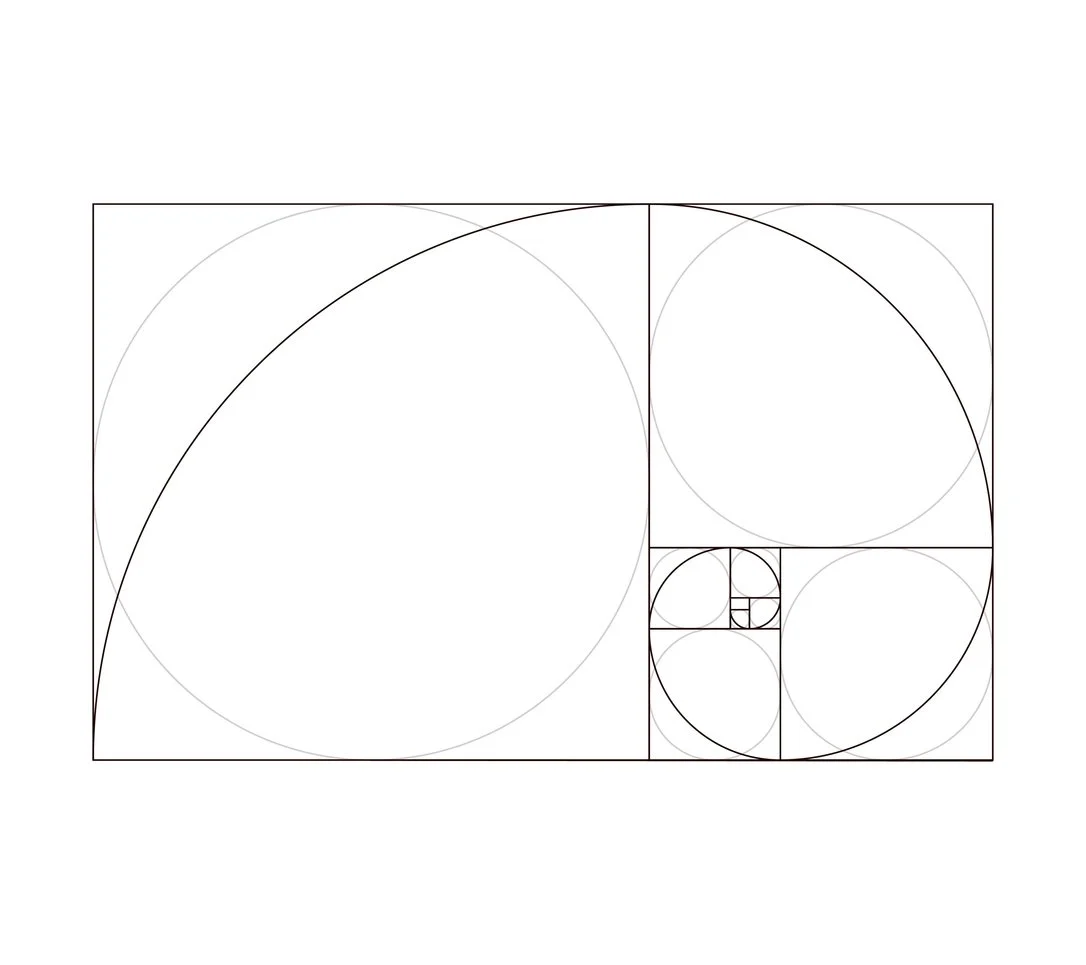
The Fibonacci Spiral
Each new number is created from the two numbers that came before it.
Now, I am not suggesting that child development follows a mathematical formula. It does not. Development is individual, nonlinear, and influenced by far too many variables for that.
But there is something about the way the Fibonacci sequence builds that feels relevant to how I think about development.
What comes later depends, in part, on what came before.
Increasingly complex abilities do not just appear. They are supported by earlier processes that have been developing, interacting, and becoming more coordinated over time.
And when a child struggles with something complex, I think we need to ask what came before it.
We Usually Start With What We Can See
A child struggles to organize a written paragraph, so we work on organization.
A child forgets multistep directions, so we practice following directions.
A child repeatedly forgets to turn in completed assignments, so we make a checklist.
A child has difficulty planning a project, so we teach a planning strategy.
Sometimes those supports are exactly what the child needs.
But sometimes we move to intervention before we really understand what is happening underneath the difficulty.
One of the questions I come back to again and again is:
What earlier processes does this ability depend on, and which of those processes is not sufficiently supporting the child yet?
That question changes where I look.
Instead of stopping at the skill that is not going well, I start thinking about what has to happen cognitively for that skill to be possible in the first place.
A Complex Skill Is Rarely Just One Skill
Take planning.
Planning sounds like one executive function skill, but think about everything a child may have to do before an effective plan is even possible.
They have to notice the information that matters.
They have to direct their attention toward it.
They may need to hold information in mind while thinking about what to do next.
They need some kind of internal representation of what they are trying to accomplish.
They may need to anticipate what could happen, compare possibilities, inhibit an immediate response, and monitor whether what they are doing is actually moving them toward the goal.
There is a lot underneath the word planning.
So when a child struggles with planning, I do not automatically assume planning itself is the place to begin.
The same thing happens in other areas.
A reading comprehension difficulty may involve more than reading comprehension.
A language organization difficulty may involve more than language organization.
A child who appears inattentive may not simply have an attention problem.
What we see gives us information. But it does not necessarily tell us what produced the difficulty.
Speech and Language Development Gives Us Another Good Example
This same idea shows up all the time in speech and language.
Let's say a child is having difficulty producing a longer, grammatically organized sentence.
We could look at the sentence and say, “This child has a syntax problem.”
And that description may be accurate.
But it still leaves a lot of questions unanswered.
What does a child need to do in order to formulate that sentence in the first place?
They may need to perceive the language models around them clearly enough to extract useful patterns.
They need to attend to the relevant information.
They may need to hold words and ideas in mind long enough to combine them.
They need to organize those ideas internally before or while putting them into language.
They may need to monitor what they are saying and notice whether the sentence matches what they intended to communicate.
If any one of those processes is less efficient, the outward result may look like a language problem.
And it is a language problem in the sense that language performance is affected.
But if we stop there, we may miss what is making language hard for that child.
The same can happen with word retrieval, narrative organization, following directions, conversational language, or even learning new vocabulary.
Sometimes the speech or language behavior we see is the end point of a much longer developmental process.
That is why I want to understand the pathway, not just name the outcome.
This Is Where the Fibonacci Sequence Keeps Coming Back to Me

In the Fibonacci sequence, each new number depends on what came before it.
Development, of course, is far more complicated, but I think there is a useful parallel here.
Earlier processes do not disappear when more complex abilities begin to emerge.
Attention still matters when a child is using working memory.
Working memory still matters when a child is planning.
Inhibition still matters when a child is self-monitoring.
Those earlier processes continue to participate in what comes next.
And as children get older, the demands placed on those processes also increase.
Schoolwork becomes more complex. Language becomes more complex. Social situations become more complex. Children are expected to manage more information, make more decisions, anticipate more, and do more of it independently.
A child may have managed pretty well when the demands were lower.
Then something changes.
Now the child cannot keep up with assignments.
Or reading comprehension starts to break down.
Or written language becomes disorganized.
Or everyone starts saying the child needs to “work on executive function.”
It can look like a new problem suddenly appeared.
Sometimes it did.
But sometimes the increased demand simply made an earlier vulnerability easier to see.
Small Differences Can Become More Noticeable Over Time
Imagine a child who has difficulty creating or maintaining a strong internal representation of information.
During a simple task, that may not be especially obvious.
But later, that child may be expected to remember what happened in a story, connect it to something that happened earlier, anticipate what could happen next, organize those ideas, and explain their reasoning.
Now that earlier difficulty has a much bigger impact.
Depending on where we encounter the child, we might call what we see a reading comprehension problem, a language organization problem, an executive function problem, or an academic problem.
Those descriptions may all tell us something useful.
They still do not tell us exactly what is happening underneath.
And that is the part I want to understand.
This Is Why I Think About Executive Function Developmentally
This idea is central to the Sumpter Executive Function Framework, or SEFF.
Within the SEFF, I use the metaphor of a plant.
There are foundational Roots, increasingly complex Leaves, and higher-level Flowers.
The point is not simply to put executive function skills into three categories.
It is to think about their relationships.
If a child is struggling with a higher-level ability, I want to know what is happening farther down in the system before assuming that the higher-level ability itself is where intervention should begin.
That does not mean every difficulty can be neatly traced back to one underlying process. Children are much more complicated than that.
It means I want to understand what this particular child has to do cognitively for this particular task to be successful.
What is working well?
What is making the task harder?
What processes does the child have available to them?
Where might they need more support?
Those questions tell me far more than simply asking, “How do I get this child to be more organized?”
The Same Difficulty Can Come From Different Processes
This is also why I am cautious about making assumptions based on a diagnosis, a behavior, or even a test score.
Two children can show the same outward difficulty for very different reasons.
Think again about two children who both struggle to organize their writing.
One child may have difficulty holding several ideas in mind long enough to compare and arrange them.
Another may have difficulty organizing the overall structure of what they want to say.
Another may have trouble monitoring whether what they have written actually matches the idea they were trying to communicate.
From the outside, we might describe all three children as having difficulty with written organization.
But that does not mean they need the same thing from us.
The same is true when two children share a diagnosis.
A diagnosis can give us useful information about patterns found across groups of children. It can help us know what we may want to pay attention to or investigate further.
But it cannot tell us exactly how an individual child is processing information in a particular moment.
We still have to understand the child.
I Keep Coming Back to What Math Taught Me
There is one idea from all those years of math that has stayed with me.
In math, I was taught not to stop at the answer. In child development, I don't think we should stop at the outcome either.
A child is not completing their work.
That is an outcome.
A child cannot organize a paragraph.
That is an outcome.
A child has difficulty putting their ideas into an organized sentence.
That is an outcome too.
A child forgets directions, becomes overwhelmed during a task, rushes through their work, or cannot figure out how to get started.
Those are things we can observe.
But I want to know how the child got there.
What had to happen before that moment?
What information did the child notice?
What did they hold in mind?
What were they able to anticipate?
What did they understand about the goal?
Where did the process start to become difficult?
Those questions give us a very different picture of the child than the outcome alone.
And, to me, that is where assessment becomes much more useful.
Sometimes We Need to Look Earlier in the Process
When a child is struggling, of course we want to help with the thing that is difficult right now.
Sometimes working directly on that skill is exactly what is needed.
But sometimes we need to look earlier in the process first.
Not because development follows one fixed path. It does not.
Not because every child has to master one skill before another can emerge. That is not how development works either.
And certainly not because there is some Fibonacci formula for child development. There isn't.
The sequence is simply a way of picturing an idea that I think is incredibly important.
What comes later is influenced by what came before.
As development becomes more complex, earlier processes continue to participate in what the child is being asked to do now.
So when a child is struggling with a higher-level skill, I want us to resist the urge to stop at the most obvious explanation.
Instead, I want us to ask:
What earlier processes does this ability depend on, and which of those processes is not sufficiently supporting the child yet?
Because the problem we see is not always where the problem begins.
About the Author
Tera Sumpter, M.A., CCC-SLP, is a speech-language pathologist, author, educator, and founder of Seeds of Learning®, LLC. She developed the Sumpter Executive Function Framework (SEFF), a developmental framework for understanding executive function and its relationship to speech, language, literacy, learning, and independence.
Her work includes the book The Seeds of Learning: A Cognitive Processing Model for Speech, Language, Literacy, and Executive Functioning, the Seeds of Learning® Executive Function Cohort Community, the SEFF-Q Screener & Questionnaire, and SPARQ-EF™, a classroom-based executive function program.
The concepts discussed in this article reflect Tera’s developmental approach to executive function and the Sumpter Executive Function Framework (SEFF).
Learn more about Tera’s work and Seeds of Learning® resources at terasumpter.com.
© 2026 Seeds of Learning®, LLC. All rights reserved. Sumpter Executive Function Framework (SEFF) and related Seeds of Learning® frameworks, materials, and educational content are proprietary to Seeds of Learning®, LLC.